
Graded backyard patios
Concrete Patios in Alsip That Drain Away From the House
Where does your backyard runoff go now? A properly graded patio gives it a better route.
Why Does Patio Grade Matter So Much?
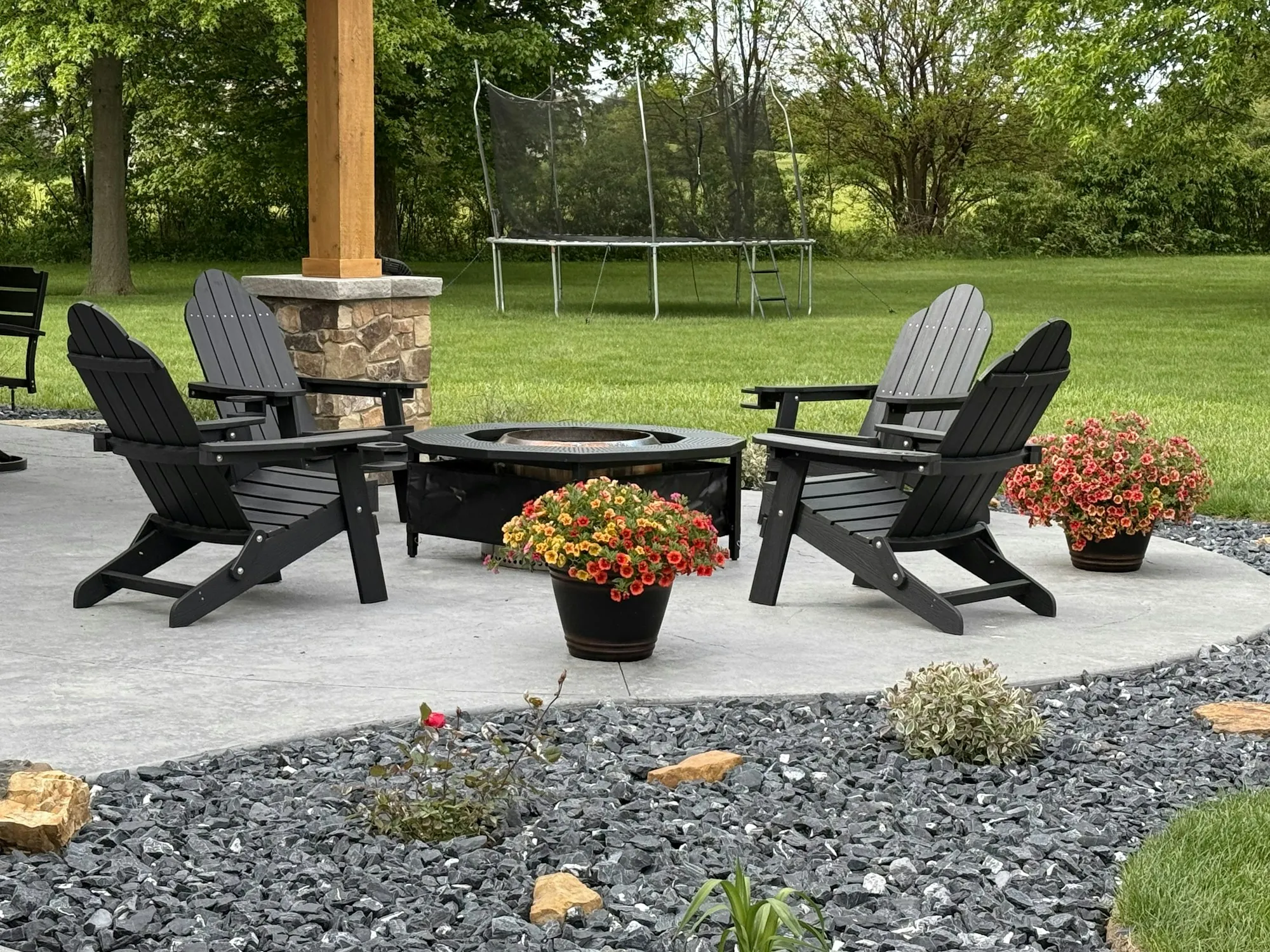
A patio is a large, hard surface right next to your foundation. Every storm drops water on it, and that water has to go somewhere. If the slab is flat, it puddles. If it tilts toward the house, it runs straight to the foundation wall, down along the basement, and into window wells. Many Alsip lots are nearly flat to begin with, so the patio has to create its own drainage. That is why grade is the first thing we measure on a patio estimate. We read the existing yard with a level, note where downspouts discharge and where the neighbor's runoff arrives, then decide how much fall the slab needs and which direction it should point. From there the build is careful and methodical. Sod and topsoil are excavated, crushed gravel is compacted in layers, and forms are set to that planned pitch. Most patios are poured around 4 inches thick. You choose the surface: broomed for traction, smooth troweled for a clean modern look, or stamped and tinted to resemble stone. Joints are laid out to suit the shape, and the edges are backfilled once forms are stripped.
What Goes Into a Patio Estimate
Size and finish are up to you. These items are always listed.
Grade survey
A level reading of the yard, downspouts and low spots before any layout.
Layout for use
Sized around the table, grill and door swing so the space works.
Excavation and gravel
Organic soil removed and a compacted stone bed laid to depth.
Planned fall
Forms set so stormwater leaves the slab heading away from the foundation.
Surface options
Broomed, smooth troweled, or stamped with tint and sealer.
Joints and edges
Control joints suited to the shape, edges backfilled for seed or sod.
How a Patio Comes Together
How will you use it?
We start with questions about seating, cooking and traffic, then measure the yard and read its grade.
Estimate with every line
Size, thickness, gravel depth, pitch direction, finish and any removal are written out separately.
Excavate, form, pour
The area is dug and bedded, forms go in at the planned fall, and the patio is poured, finished and cured.
Why Our Patios Stay Dry Next to the House
Grade measured first
Drainage is decided before layout, so the slab works with the yard.
Sized for real living
We plan around furniture and traffic so the patio is not too cramped.
Finish explained clearly
Broom, smooth or stamped, with the cost difference shown on paper.
- Yard grade surveyed
- Fall away from foundation
- Compacted stone bed
- Edges backfilled
Ready for a Patio That Keeps the Basement Dry?
Give us a rough size and how you picture using it. We will measure the grade and come back with an itemized estimate.